Why Vibly is different

Less noise. More signal. A little fun.

On Vibly, sending an application takes a small amount of effort, and reading one takes less. Each part of the product is built around that.

Applying costs something, and care gets it back.

Each application costs 100 tokens. When the role turns out to be a good fit, the tokens come back: all 100 for a Match, 50 for a Maybe.

A month of free tokens covers five applications. Someone who sends five careful ones keeps going. Someone who sends fifty hopeful ones runs out, and an employer is spared the reading.

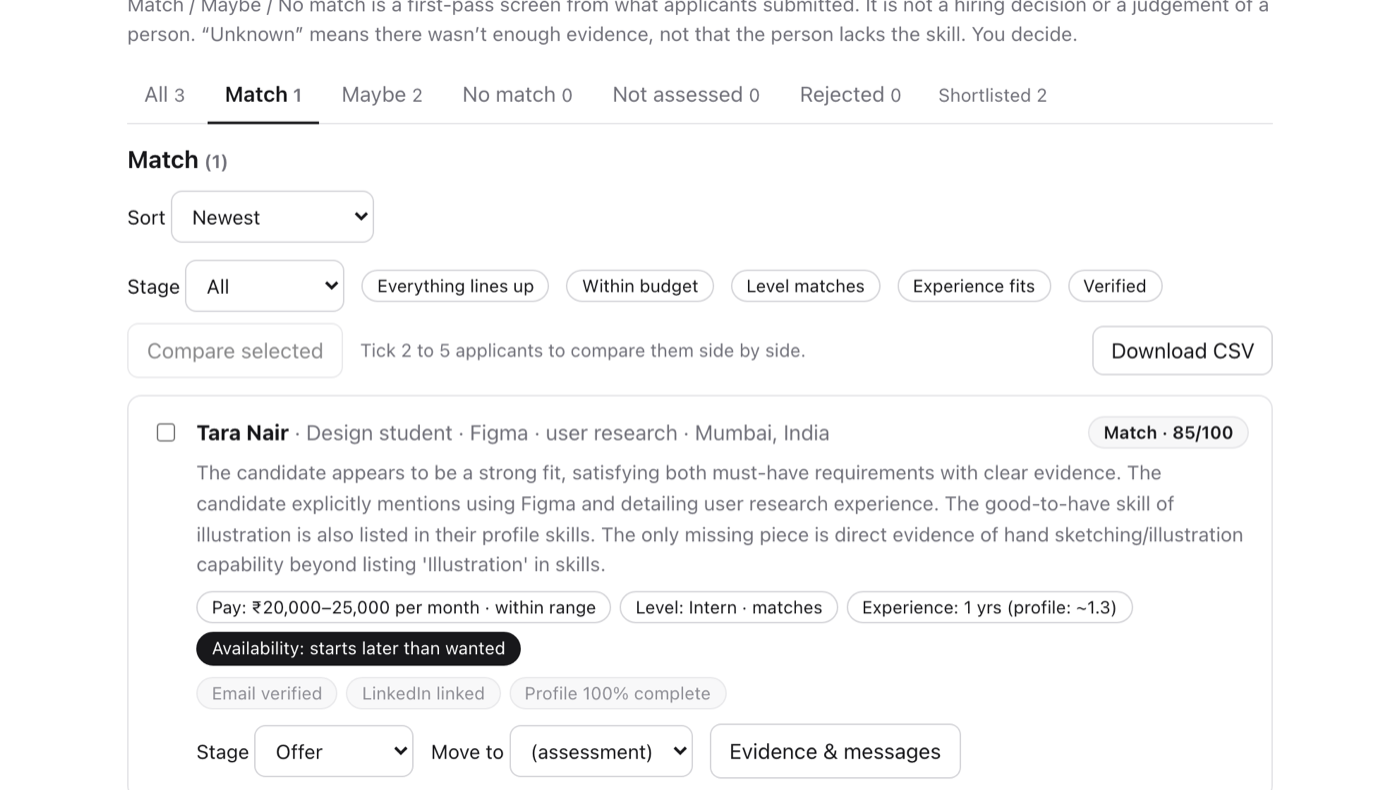
A list of applicants with a Match, Maybe or No match label on each.

Employers write only to people who applied.

A company can start a conversation only with someone who applied to one of its roles. Nobody gets a message from a company they never contacted.

Posting a role costs tokens as well, and a company is confirmed through an email address on its own domain. A listing that nobody stands behind is harder to publish here.

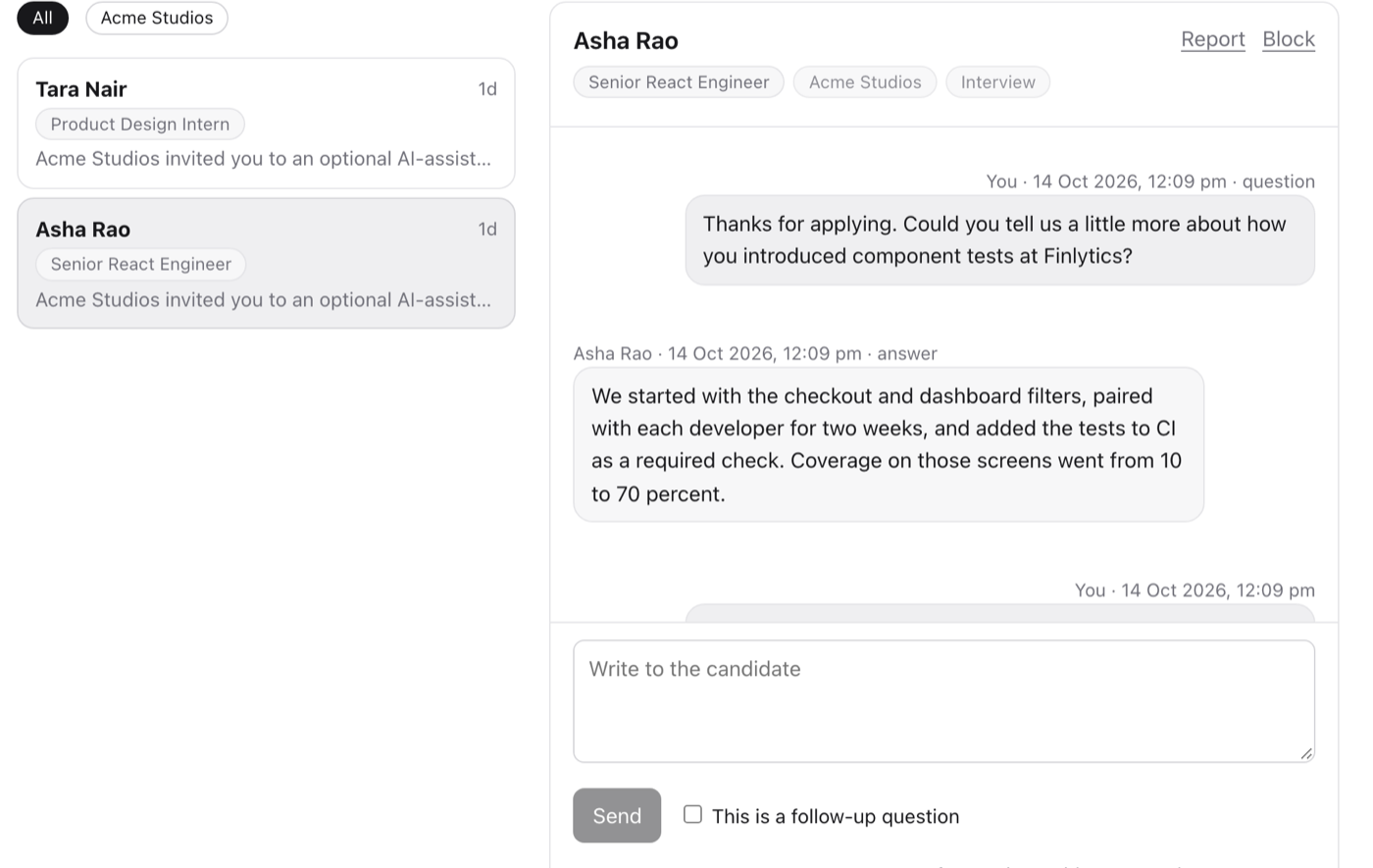
A conversation between an employer and a candidate, with the role named at the top.

An application is read once, with the evidence beside each result. A requirement the applicant never mentioned is marked unknown. It is not counted as a no.

What rises to the top

Pay, level and years, said up front

Applicants state the pay they expect, the level they are applying at and their years of experience. Vibly sets each next to what the listing says and flags the gaps, so the awkward conversation happens before anyone has spent a week.
Claims that do not match the profile

If someone declares more years of experience than their profile adds up to, the employer sees that, with both numbers. The applicant sees it too, before they send.

Evidence, not adjectives

Every requirement shows the words the applicant wrote that support it. If there is nothing to show, the result says there was not enough to tell.

Hoped-for answers

An employer can mark the answer they hoped for on a yes or no, pick-one or number question. A different answer is flagged on the applicant. Nobody is turned away by it.

Conversations that have somewhere to start.

Every conversation belongs to one application, so the role is named on it. An employer can ask a follow-up question, and the applicant's reply is kept with that question as the answer.

An employer can also invite an applicant to an optional AI-assisted interview. The applicant reads how it works and decides whether to take part.

See an application from both sides

A bit of fun, kept away from the decision.

Every application earns XP. A day when you do something earns a little more, and a streak of days in a row adds a bonus up to a cap. There is a weekly leaderboard, shown under a nickname unless you choose to use your name, and you earn XP when a company you referred posts its first role.

None of it changes how an application is read. XP cannot be turned into tokens.

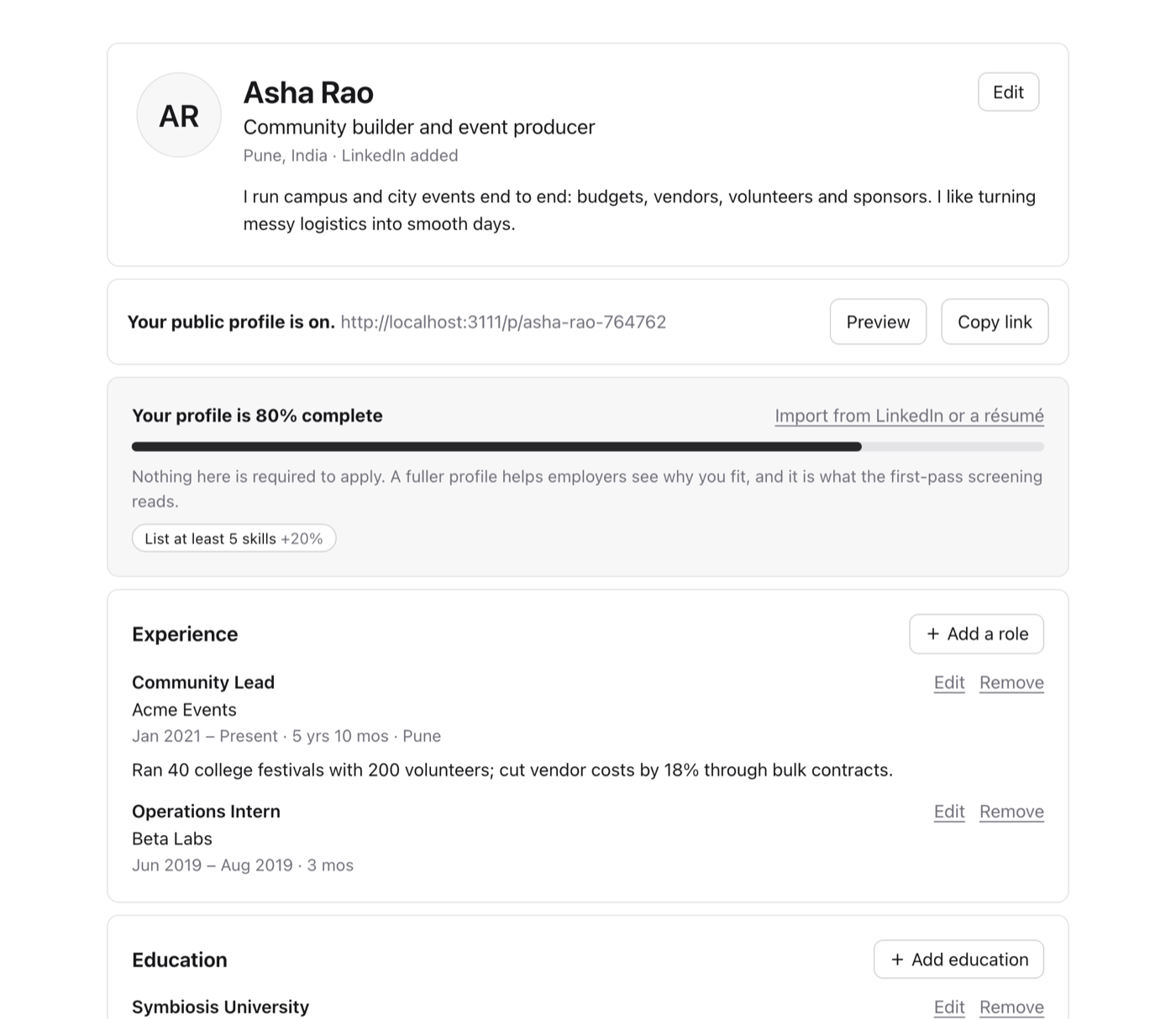
A candidate profile page.

What Vibly will not do

Reject anyone by itself

The AI gives a first read. An employer reads the real answers, can disagree, and can move anyone to another group. Every move is logged and the original read is kept.

Show your contact details

Employers never see your email address or phone number. Your public profile is off until you switch it on.

Trust and privacy

See how it reads your sentence.

Say what you are looking for, or who you need.